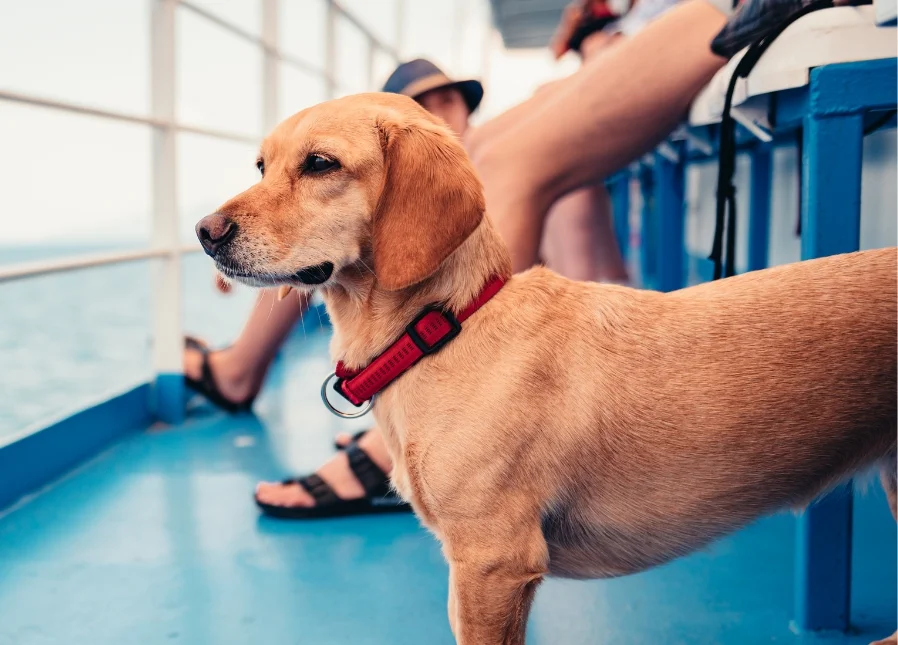
Travelling to France with My Dog FAQs
Dreaming of long walks on French beaches or countryside adventures with your four-legged friend? Travelling to France with your dog is absolutely possible – but there are a few key things you need to know to make the trip smooth, safe, and fully legal. At Travel Vet in Staines-upon-Thames near Heathrow Airport, we specialise in pet travel requirements and have helped thousands of dogs journey happily across the Channel.
Contact us to book an appointment
Here’s our handy FAQ guide for taking your dog from England to France and back again via ferry or Eurotunnel.
Planning to travel by plane? Also read our FAQs on Preparing your pet for plane travel
What documentation does my dog need to enter France from the UK?
To take your dog to France, you’ll need:
- A microchip (this must be implanted before or on the same day as their rabies vaccination)
- A valid rabies vaccination
- An Animal Health Certificate (AHC) issued by an official vet within 10 days of travel
Your dog must be at least 12 weeks old before they can have the rabies vaccine, and you’ll need to wait 21 days after the vaccination before travelling.
What is an Animal Health Certificate (AHC)?
The Animal Health Certificate, or AHC, replaced the old EU Pet Passport for UK residents post-Brexit. It is a multi-page legal document that confirms your dog is microchipped and up to date with rabies vaccination. It must be issued by an Official Veterinarian (OV) and is only valid for one trip, so you’ll need a new one every time you travel.
Top tip: Book your AHC appointment well in advance of travel – especially during school holidays when demand is high.
Can my dog travel by ferry or Eurotunnel?
Yes, both options are dog-friendly with the right preparation.
Ferries:
Most ferry companies, including DFDS and Brittany Ferries, allow dogs to travel in your vehicle during the crossing. Some offer pet-friendly cabins or designated pet areas. You should always check with the ferry company before booking your tickets.
Eurotunnel:
This is a popular and quick option. Your dog remains with you in the car for the 35-minute journey. It’s considered less stressful for many pets and is very efficient.
Whichever you choose, make sure to declare your dog when booking and follow the operator’s guidelines for pet check-in.
Planning to travel by plane? Read our FAQs on Preparing your pet for plane travel
What do I need to do to bring my dog back to the UK?
Before returning to the UK, your dog must have a tapeworm treatment administered by a vet in France. This must:
- Be given between 24 and 120 hours (1–5 days) before your return
- Be recorded in the Animal Health Certificate
Note: This requirement only applies to dogs, not cats or ferrets.
Can I use a Pet Passport instead of an Animal Health Certificate?
As of 22 April 2026, EU pet passports can no longer be used by residents of Great Britain (England, Scotland and Wales) for travel into the EU, regardless of when or where the passport was issued. Pet owners must instead obtain an Animal Health Certificate for each trip.
UK-issued pet passports are no longer accepted for travel to the EU.
Do I need to treat my dog for ticks or fleas?
It’s not a legal requirement for travel, but we strongly recommend you use effective tick and flea prevention when travelling to mainland Europe. Some parasites in France are different from those in the UK, including sandflies and heartworm-carrying mosquitoes, depending on the region and time of year.
Ask us about suitable travel-safe parasite protection.
Is it safe and comfortable to travel long distances with my dog?
Absolutely – provided you prepare well. Make sure to:
- Plan regular breaks on long drives
- Bring plenty of water and your dog’s usual food
- Use a crash-tested harness or travel crate
- Carry familiar items like a blanket or toy
- Avoid travel in extreme heat
Eurotunnel is often a better choice during summer as you can stay with your dog in an air-conditioned vehicle.
What happens if we want to stay longer or change our plans?
An AHC is valid for:
- Entry into the EU: Within 10 days of issue
- Ongoing EU travel: For 4 months (as long as rabies vaccination remains valid)
- Re-entry to the UK: Within that 4-month window (and with tapeworm treatment for dogs)
If your return date changes, make sure the tapeworm treatment is still within the 1-5 day window before travel.
Can Travel Vet help me get everything sorted?
We’re here to make pet travel stress-free. Whether you need a fast-track AHC, rabies vaccination, or advice on tick-borne diseases in Europe, our team is here to help every step of the way.
Book a pet travel appointment with us today and travel with peace of mind.
Ready to get started? Let’s get your dog travel-ready.